• Skip to main content
  • Skip to primary sidebar
  • Home
  • About
  • Recommended Readings
    • 2022 Book Reading
    • 2023 Recommended Readings
    • Book Reading 2024
    • Book Reading 2025
    • Book Reading 2026
  • Supply Chain Management Guide
  • PKM
  • Microsoft Excel
  • Microsoft Copilot in Office 365
  • Public Wiki Page

Ali Raza Zaidi

A practitioner’s musings on Dynamics 365 Finance and Operations

Uncategorized

Three TSQL books which every software developer must read

January 15, 2012 by alirazazaidi

In my seven years of development experience, I read my tutorial and books on programming as well as. But when we talk about sql server from developer ‘s perspective. The following books are best. From novice developer to expert Tsql developer I recommend these books. All these books are from Itzik Ben-gan


From Microsoft learning site

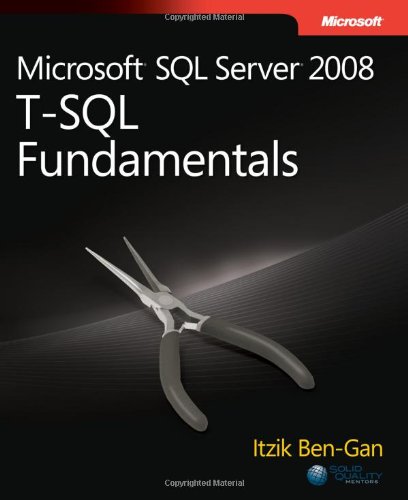
Microsoft® SQL Server® 2008 T-SQL Fundamentals


http://www.microsoft.com/learning/en/us/book.aspx?ID=12806&locale=en-us

About The BookLearn T-SQL, write better code and queries, and extend your SQL Server knowledge

Master the foundations of T-SQL with the right balance of conceptual and practical content. Get hands-on guidance—including exercises and code samples—that show you how to develop code to query and modify data. You’ll gain a solid understanding of the T-SQL language and good programming practices, and learn to write more efficient and powerful queries.

Discover how to:

  • Apply T-SQL fundamentals, create tables, and define data integrity
  • Understand logical query processing
  • Query multiple tables using joins and subqueries
  • Simplify code and improve maintainability with table expressions
  • Explore pivoting techniques and how to handle grouping sets
  • Write code that modifies data
  • Isolate inconsistent data and address deadlock and blocking scenarios

 
Inside Microsoft® SQL Server® 2008: T-SQL Querying
http://www.microsoft.com/learning/en/us/book.aspx?ID=12804&locale=en-us
About The BookMaster the mechanics behind advanced querying and tuning—for faster, more scalable code 

Tackle the toughest set-based querying and query tuning problems—guided by an author team with in-depth, inside knowledge of T-SQL. Deepen your understanding of architecture and internals—and gain practical approaches and advanced techniques to optimize your code’s performance.

Discover how to:

  • Move from procedural programming to the language of sets and logic
  • Optimize query tuning with a top-down methodology
  • Assess algorithmic complexity to predict performance
  • Compare data-aggregation techniques, including new grouping sets
  • Manage data modification—insert, delete, update, merge—for performance
  • Write more efficient queries against partitioned tables
  • Work with graphs, trees, hierarchies, and recursive queries
  • Plus—Use pure-logic puzzles to sharpen your problem-solving skills

Inside Microsoft® SQL Server® 2008: T-SQL Programming
http://www.microsoft.com/learning/en/us/Book.aspx?ID=12805&locale=en-us


About The BookGet the in-depth architectural insights you need to exploit advanced T-SQL programming techniques.

Get a detailed look at the internal architecture of T-SQL with this comprehensive programming reference. Database developers and administrators get best practices, expert techniques, and code samples to master the intricacies of this programming language—solving complex problems with real-world solutions.Discover how to:

  • Work with T-SQL and CLR user-defined functions, stored procedures, and triggers.
  • Handle transactions, concurrency, and error handling.
  • Efficiently use temporary objects, including temporary tables, table variables, and table expressions.
  • Evaluate when to use set-based programming techniques and when to use cursors.
  • Work with dynamic SQL in an efficient and secure manner.
  • Treat date- and time-related data in a robust manner.
  • Develop CLR user-defined types and learn about temporal support in the relational model.
  • Use XML and XQuery and implement a dynamic schema solution.
  • Work with spatial data using the new geometry and geography types and spatial indexes.
  • Track access and changes to data using extended events, SQL Server Audit, change tracking, and change data capture.
  • Use Service Broker for controlled asynchronous processing in database applications.All the book’s code samples will be available for download from the companion Web site.


Data warehouse Concept White Paper

January 13, 2012 by alirazazaidi

I found very good pdf, It  is wrote by unknown, but  it helps me to clear understanding of basics of data warehouse. You can download it from my dropdown folder


http://dl.dropbox.com/u/22227947/dataWarehouse-concepts.pdf

Data warehouse Concepts

January 13, 2012 by alirazazaidi

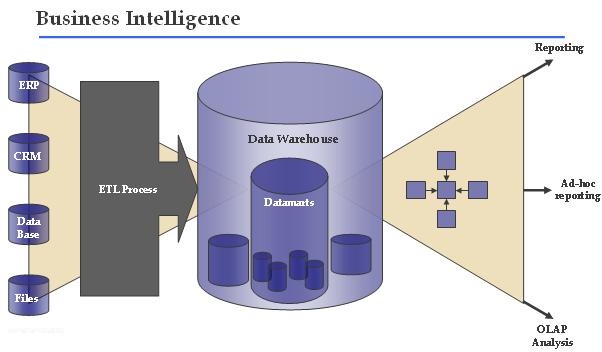
Data Warehouse is a central managed and integrated database containing data from the operational sources in an organization (such as SAP, CRM, ERP system). It may gather manual inputs from users determining criteria and parameters for grouping or classifying records.

A source for the data warehouse is a data extract from operational databases. The data is validated, cleansed, transformed and finally aggregated and it becomes ready to be loaded into the data warehouse.
That database contains structured data for query analysis and can be accessed by users. The data warehouse can be created or updated at any time, with minimum disruption to operational systems. It is ensured by a strategy implemented in a ETL process.
Data warehouse is a dedicated database which contains detailed, stable, non-volatile and consistent data which can be analyzed in the time variant.
Sometimes, where only a portion of detailed data is required, it may be worth considering using a data mart. A data mart is generated from the data warehouse and contains data focused on a given subject and data that is frequently accessed or summarized.

A common way of introducing data warehousing is to refer to the characteristics of a data warehouse as set forth by William Inmon:

  • Subject Oriented
  • Integrated
  • Nonvolatile
  • Time Variant

Subject Oriented

Data warehouses are designed to help you analyze data. For example, to learn more about your company’s sales data, you can build a warehouse that concentrates on sales. Using this warehouse, you can answer questions like “Who was our best customer for this item last year?” This ability to define a data warehouse by subject matter, sales in this case, makes the data warehouse subject oriented.

Integrated

Integration is closely related to subject orientation. Data warehouses must put data from disparate sources into a consistent format. They must resolve such problems as naming conflicts and inconsistencies among units of measure. When they achieve this, they are said to be integrated.

Nonvolatile

Nonvolatile means that, once entered into the warehouse, data should not change. This is logical because the purpose of a warehouse is to enable you to analyze what has occurred.

Time Variant

In order to discover trends in business, analysts need large amounts of data. This is very much in contrast to online transaction processing (OLTP) systems, where performance requirements demand that historical data be moved to an archive. A data warehouse’s focus on change over time is what is meant by the term time variant.


Reference : http://docs.oracle.com/cd/B10501_01/server.920/a96520/concept.htm

Biztalk 2010 and CEP (Complex Event Processing)

January 5, 2012 by alirazazaidi

 For all those friends who are interested in integrating CEP with BizTalk, check out the white paper by Jesus Rodriguez at :
http://www.microsoft.com/downloads/en/details.aspx?FamilyID=6c1da607-4785-4668-a274-6898c38ea603StreamInsight is part of SQL 2008R2. You have to read on StreamInsight before checking out this paper.

This paper is very conceptual and does not provide any code snippets. If you are looking for some code samples, then use the samples that come with StreamInsight download and extend them.

Configuring BAM portal on Biztalk 2010

January 5, 2012 by alirazazaidi

So, I installed Biztalk 2010 on Winows 7 with SQL server 2008 R2 on a 32 bit machine. Biztalk configuration worked smoothly as one would expect it to until the wizard tried to enable BAM portal. Biztalk configuration wizard threw an error saying “Default Web Site can’t be validated”. I did some research and found that almost everyone that had this error got it fixed by installing “IIS6 compatibility” role on the Server. But in my case, this role was already installed. But just to be sure, I uninstalled it–> restarted the server and installed it back. Only to find that it did not make any difference!

I tried hacking my way by physically creating BAM application on the IIS but did not work either. Since BAM is a pre-compiled version, I could not debug it as I would do in an asp.net web application. Then, I thought of creating a new website called “BAM” at the same level as the “Default Website” but on a different port (not 80). In my case, I used port 81. I ran the Biztalk Configuration wizard, pointed it to “BAM” site instead of “Default WebSite” and it worked!!

Later, I did some research and found out that this is a “bug” or a “known behavior” with Biztalk 2010 installation. It seems creating a new site for BAM is generally accepted solution.

Check out :http://social.msdn.microsoft.com/Forums/en/biztalkgeneral/thread/ef650460-c219-4b34-bc7a-41bb7e75ec81

BAM Guide for Biztalk 2010

January 3, 2012 by alirazazaidi

Another great skill in BizTalk, the BAM.

This tool is very powerfull but never really used, and often misunderstood.

For helping, Technet did a great job with these series of article about BAM. You can get general informations or very technical ones.

For the moment here is the link I talked about

http://social.technet.microsoft.com/wiki/contents/articles/5599.aspx

Business Rules Framework Walkthroughs for bizTalk 2010

January 1, 2012 by alirazazaidi

Currently studying BRE in BizTalk 2010, i found following link MSDN. The complete walkthroughs for BizTalk 2010

  • Walkthrough: Creating a Simple Business Policy
  • Walkthrough: Testing the Policy
  • Walkthrough: Invoking the Policy from an Orchestration
  • Walkthrough: Creating and Using a Vocabulary in the Policy
  • Walkthrough: Adding a Rule to the Policy
  • Walkthrough: Modifying the Policy
  • Walkthrough: Tracking Policy Execution
  • Walkthrough: Deploying the Policy
  • Walkthrough: Executing the Policy Programmatically
  • Walkthrough: Creating a Fact Creator
  • Walkthrough: Using Database and .NET Facts

What is MSMQ and How to configure it on windows 7

December 25, 2011 by alirazazaidi

Microsoft Message Queue (MSMQ):
MSMQ is a messaging protocol that allows applications running on separate servers/processes to communicate in a failsafe manner. A queue is a temporary storage location from which messages can be sent and received reliably, as and when conditions permit. Queues are used to receive and send the Messages.
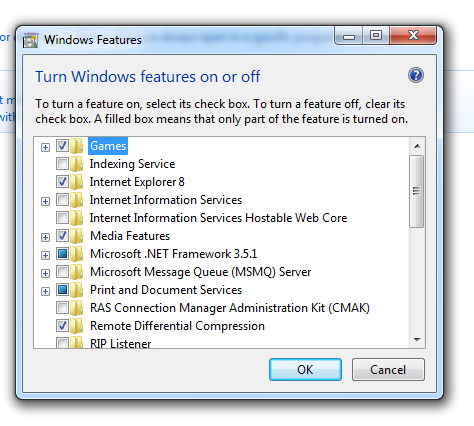
To Install MSMQ, Go to Control Panel -> Add Remove Program -> Add Windows Component and select “Message Queuing”


Install MSMQ – Microsoft Messaging Queue

[Read more…] about What is MSMQ and How to configure it on windows 7

BizTalk Server Pipeline Component Wizard

December 13, 2011 by alirazazaidi

If you need to design BizTalk Pipeline custom component, Use the BizTalk Pipeline Component Wizard on codeplex
(http://btsplcw.codeplex.com), It is my favorite way to create pipeline components.
It is an easy-to-use tool that walks you through the pipeline component creation
process via a friendly wizard.

http://btsplcw.codeplex.com/

BizTalk Server 2010 R2 Announced

December 11, 2011 by alirazazaidi

A few days ago , Microsoft announced the forthcoming release of BizTalk Server 2010 R2 on the BizTalk Server blog site.  This is advanced notice, given that this new version will ship six months after the release of Windows 8, expected in the second half of next year.  On this basis, we can expect the new version of BizTalk Server to arrive in 2013.  Given the BizTalk team’s previous record of name changes, I wonder if this will eventually be released as BizTalk Server 2013.


More Infor read this http://blogs.msdn.com/b/biztalk_server_team_blog/archive/2011/12/08/biztalk-server-2010-r2.aspx

« Previous Page
Next Page »

Primary Sidebar

About

I am Dynamics AX/365 Finance and Operations consultant with years of implementation experience. I has helped several businesses implement and succeed with Dynamics AX/365 Finance and Operations. The goal of this website is to share insights, tips, and tricks to help end users and IT professionals.

Legal

Content published on this website are opinions, insights, tips, and tricks we have gained from years of Dynamics consulting and may not represent the opinions or views of any current or past employer. Any changes to an ERP system should be thoroughly tested before implementation.

Categories

  • Accounts Payable (2)
  • Advance Warehouse (2)
  • AI (3)
  • Asset Management (3)
  • Azure Functions (1)
  • Books (6)
  • Certification Guide (3)
  • ChatGPT (3)
  • Claude (1)
  • Customization Tips for D365 for Finance and Operations (64)
  • D365OF (60)
  • Data Management (1)
  • database restore (1)
  • Dynamics 365 (59)
  • Dynamics 365 for finance and operations (139)
  • Dynamics 365 for Operations (175)
  • Dynamics AX (AX 7) (134)
  • Dynamics AX 2012 (274)
  • Dynamics Ax 2012 Forms (13)
  • Dynamics Ax 2012 functional side (16)
  • Dynamics Ax 2012 Reporting SSRS Reports. (31)
  • Dynamics Ax 2012 Technical Side (52)
  • Dynamics Ax 7 (65)
  • Exam MB-330: Microsoft Dynamics 365 Supply Chain Management (7)
  • Excel Addin (1)
  • Favorites (12)
  • Financial Modules (6)
  • Functional (8)
  • General Journal (1)
  • Implementations (1)
  • Ledger (1)
  • Lifecycle Services (1)
  • Logseq (4)
  • Management Reporter (1)
  • Microsoft Excel (4)
  • MS Dynamics Ax 7 (64)
  • MVP summit (1)
  • MVP summit 2016 (1)
  • New Dynamics Ax (19)
  • Non Defined (9)
  • Note taking Apps (2)
  • Obsidian (4)
  • Personal Knowledge Management (3)
  • PKM (16)
  • Power Platform (6)
  • Procurement (5)
  • procurement and sourcing (6)
  • Product Information Management (4)
  • Product Management (6)
  • Production Control D365 for Finance and Operations (10)
  • Sale Order Process (10)
  • Sale Order Processing (10)
  • Sales and Distribution (5)
  • Soft Skill (1)
  • Supply Chain Management D365 F&O (5)
  • Tips and tricks (278)
  • Uncategorized (165)
  • Upgrade (1)
  • Web Cast (7)
  • White papers (4)
  • X++ (10)

Wiki

  • SCM

Copyright © 2026 · Magazine Pro On Genesis Framework · WordPress · Log in